

Steel bedside table — thin, sleek, and stainless
A steel bedside table solves a practical problem by the bed: a thin profile with high rigidity that doesn't take up unnecessary floor space, and a surface that tolerates moisture, spills, and daily touch. Steel enables wall-mounted formats with a light expression, without compromising load-bearing capacity or precision.
Why a steel bedside table?
Stainless steel is corrosion-resistant thanks to a self-repairing chromium oxide film, which regenerates when the material is oxygenated. For furniture, 304 is often the right choice, offering good formability and weldability; in coastal environments, 316 with molybdenum provides extra resistance to chloride and pitting corrosion. Outokumpu Stainless Steel Handbook thoroughly describes this mechanism and the difference between 304 and 316 (Outokumpu).
Thin material thicknesses provide the sleek, sharp geometry that suits a modern bedroom. To deliver a calm expression in use, the surface should be specified with a finish that both controls reflection and conceals fingerprints. A No. 4-brushed finish provides directional tactility; mirror-polished intensifies light and space; a satin matte texture dampens glare. Electropolishing and subsequent passivation restore corrosion resistance in heat zones around welds, extending lifespan.
Material, surface, and Danish craftsmanship
Craftsmanship makes the difference when steel becomes furniture. Small series production in Aarhus means precise bending, TIG welding performed by experienced professionals, exact fitting in mitered corners, and calibrated material thicknesses that prevent tension and buckling in thin formats. These steps elevate finish and traceability compared to mass stamping and line welding. Experience from the Danish interior industry points to material honesty and function as guiding principles; Creative Denmark describes how design here often combines sober geometry with high craftsmanship standards.
Surface treatment is technical and crucial. After welding, heat tint, iron particles, and slag are thoroughly removed, because residues can weaken the steel's passive layer. The British Stainless Steel Association reviews methods for post-weld cleaning, pickling, and restoring finish, including electropolishing, which both smoothes micro-topography and increases corrosion resistance (BSSA). For formal passivation of austenitic stainless steel, standard ASTM A967 refers to process selection and testing requirements relevant to furniture production, where long-term durability is valued.
When choosing a finish for the bedside table, these designations serve as useful reference points: No. 4 brushed, satin, mirror-polished, electropolished. The choice is not just about appearance, but also about daily maintenance and light control in a small room.
Product insight: Lund wall-mounted bedside table
The Lund bedside table was developed as a wall-mounted solution that frees up floor space and emphasizes the sleek steel aesthetic. Mounted low on a white wall above the skirting board, Lund reads as a calm, floating shelf on two levels. The top surface holds a sculptural silver candlestick with a white taper candle and a small crown-shaped glass votive; the shelf below holds a thick stack of design and fashion magazines, clearly showing capacity in use and the overall depth proportion. The setup illustrates how a steel bedside table can be integrated into a curated bedroom without traditional legs, and how finish and edge control maintain precision despite daily handling.
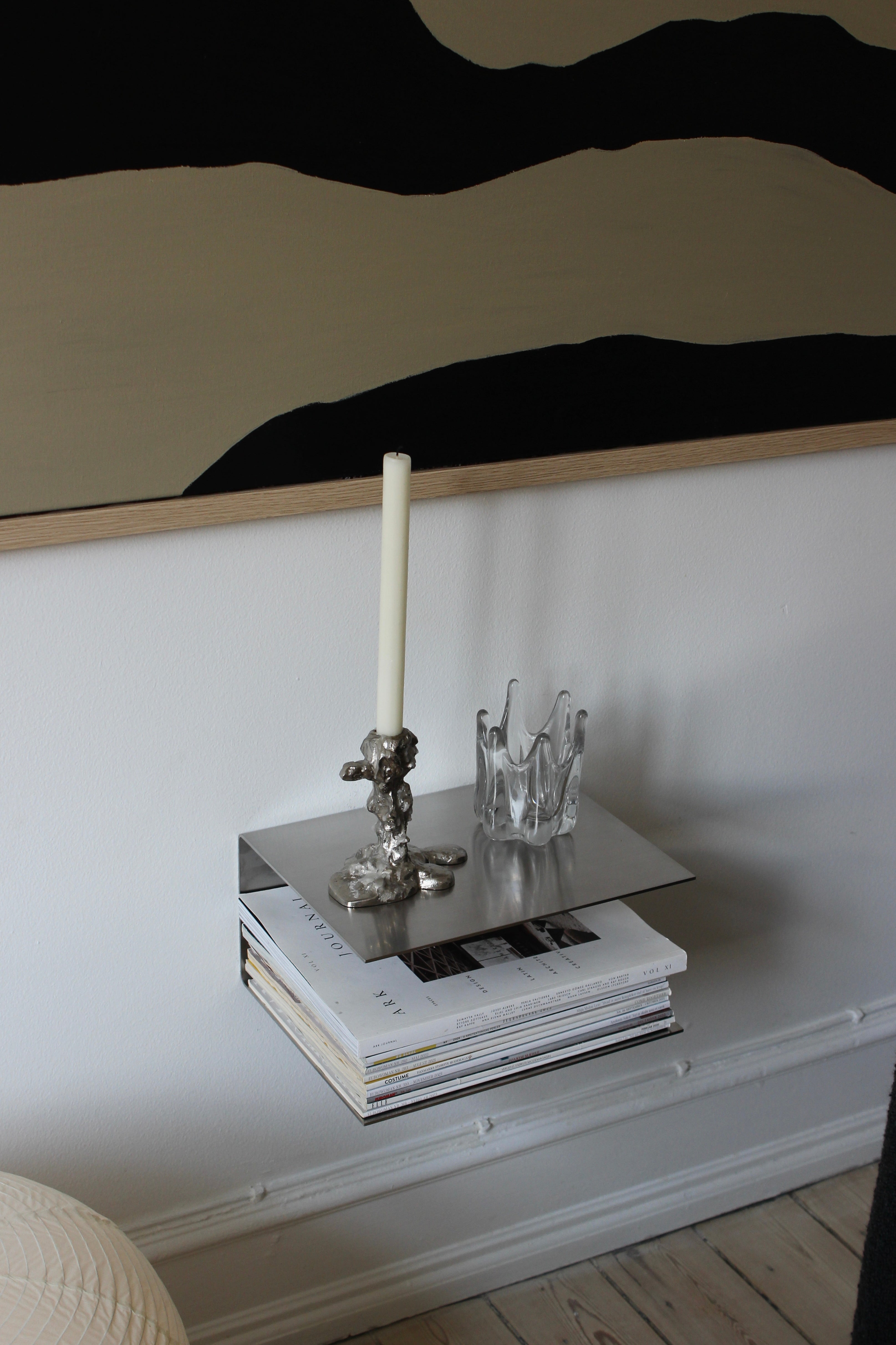
Behind the expression lies precisely the small-series approach: clean transitions between planes, meticulously cleaned welds and post-polishing, so the steel's passive layer remains intact. The result is a bedside table that withstands everyday use in a room with varying ventilation and humidity, such as the bedroom.
Format, finish, and bedside decor
A thin steel format works best when proportions and finish are harmonized with the room and bed height. Material mixing creates warmth against the cool clarity of steel; Rooaoo Acoustics highlights how metal is finely balanced by wood and textured surfaces in wall and floor materials (Rooaoo Acoustics).
- Depth and clear passage: maintain 45–60 cm clear passage next to the bed; choose narrow depth in small rooms
- Height: aim for the top edge to be roughly level with the top of the mattress for easy access to books and phones
- Width: narrower formats appear calm with single beds; double beds can accommodate more width, but let the proportion mirror the bed's weight
- Finish: choose brushed or satin for fewer fingerprints; mirror-polished only where light reflection is desired and maintenance is accepted
- Wall-mounted or freestanding: wall-mounted profiles visually relieve the floor, help with radiators and skirting boards, and make floor cleaning simpler
- Material balance: combine steel with oak or walnut in the headboard or floor, and soft textiles in rugs and bedspreads, so the room doesn't become clinical
Maintenance, aging, and value
Stainless steel doesn't require much, but it requires the right care. Wipe daily with a slightly damp microfiber cloth along the grain. For stains, use lukewarm water and pH-neutral soap; rinse and dry. Greasy fingerprints are removed with a small amount of alcohol on a cloth or a chloride-free glass cleaner. Avoid chlorine, acidic descaling agents, and steel wool, which can deposit carbon steel and initiate flash rust. After installation and any localized grinding, professional passivation or electropolishing can restore the passive film, as described in BSSA's guidelines. In coastal zones, regular rinsing with fresh water is a simple way to remove salt film. ASTM A967 describes tests and chemistries for passivation, if working with more demanding environments or after interventions.
Over time, a brushed steel bedside table does not patinate in the classic sense, but the surface can be refreshed by light re-brushing in the direction of the grain when needed, provided the correct grit is chosen. The material is fully recyclable without loss of quality, and small-series production with traceable processes makes service and refreshing possible for many years to come. This is where long-term value reveals itself: a sleek, functional form that holds up mechanically, resists moisture and wear, and can be returned to its original finish as the home changes. For a bedroom that needs to be calm and rational, steel delivers precisely the constant precision that ages slowly and reliably.

